


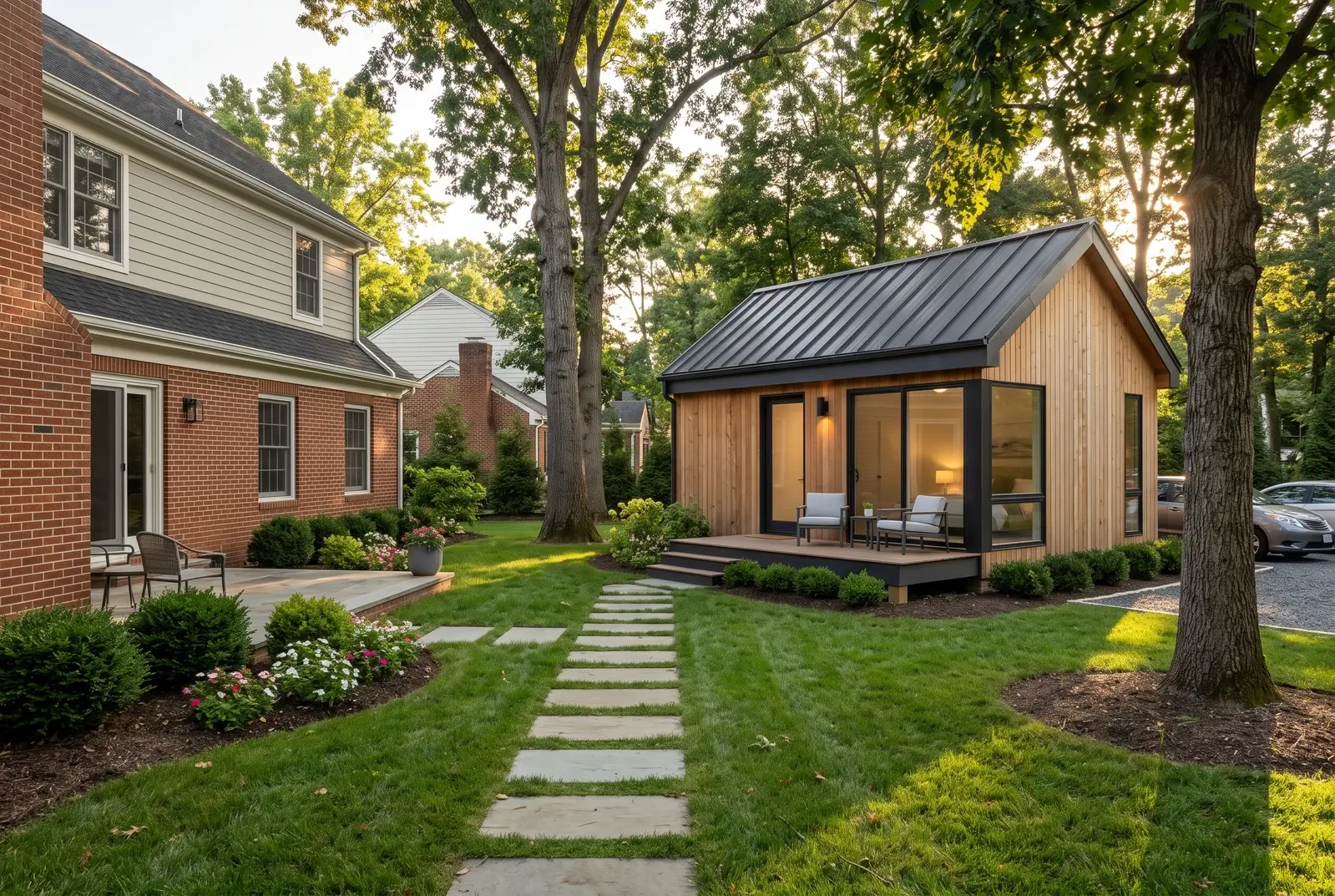
Could Your Backyard Be Your Next Rental Property?
Walk out your back door and look at that detached garage, unfinished basement, or stretch of unused lawn. Starting July 1, 2027, that space could become a second income stream. Virginia's Senate Bill 531 clears the way for homeowners in single-family zones to add accessory dwelling units (ADUs) by right, and for Northern Virginia landlords, that's a conversation worth starting now.
ADUs aren't new, but the rules around them have long been a patchwork. Some localities required special use permits, public hearings, or proof that a family member would live in the unit. SB 531 sets a statewide floor that removes many of those hurdles. It also comes with limits and exceptions that every owner should understand before calling a contractor.
At Allegiance Property Management, we've helped owners across Alexandria and Northern Virginia protect and grow their rental investments since 1990. Below, we break down what the new ADU law does, where it doesn't reach, and how to decide whether a backyard rental makes sense for your property.
Key Takeaways
By-right approval starts July 1, 2027: SB 531 requires localities to treat ADUs as a permitted accessory use in single-family zoning districts.
Permit fees are capped at $500: The ADU permit itself can't exceed $500, though building, inspection, and site fees still apply.
No family-relation requirement: Localities can no longer require that ADU occupants be related to the people in the main home.
HOA covenants still apply: Private HOA, condo, and property owners' association rules can still restrict or prohibit ADUs.
Some NoVA localities are exempt: Jurisdictions that adopted their own ADU ordinance before January 1, 2026, can keep following their local rules.
What Virginia's SB 531 Actually Changes
Governor Spanberger signed Senate Bill 531 in April 2026 as Chapter 895 of the Acts of Assembly. The law adds a new section to the state code, Virginia Code § 15.2-2292.3, with a delayed effective date of July 1, 2027.
The law defines an ADU as an attached or detached unit on the same lot as a primary residence, with its own facilities for living, sleeping, cooking, eating, and sanitation. That covers backyard cottages, converted garages, and finished basement apartments.
By-Right Approval
Under SB 531, zoning ordinances for single-family districts are treated as including ADUs as a permitted accessory use. If your project meets the law's requirements and local codes, the locality must issue the permit. No special use permit, no public hearing process to navigate.
A $500 Permit Fee Cap
The ADU permit fee is capped at $500. Keep in mind that this cap covers only the ADU permit. Building permits, inspections, and site fees are separate, so budget for the full picture.
No More Family-Only Rules
Older ordinances often required ADU occupants to be relatives of the homeowner. SB 531 prohibits localities from requiring any family relationship between the people living in the ADU and the primary home. For landlords, this is the change that turns an in-law suite into a true rental opportunity.
Fairer Setback and Size Rules
Localities can't impose rear or side setbacks on an ADU that are stricter than those for the main home or other accessory structures. If they limit ADU size, the limit can't go below 350 square feet on lots under 2,500 square feet, or 500 square feet on larger lots.
What the Law Still Allows Localities to Require
By-right doesn't mean rule-free. SB 531 lets localities set several conditions, and a few directly shape how you can rent the unit.
Minimum 30-Day Lease Terms
Localities may require ADU leases of at least 30 consecutive days. That means short-term rentals may be off the table, so plan for traditional long-term tenants.
Owner Occupancy at the Time of Application
A locality can require that the owner live in either the ADU or the main home, but only when the application is submitted. This doesn't lock you into living there permanently, but it matters if you're planning an ADU on a property you already rent out.
Parking and Building Code Compliance
Localities can require dedicated ADU parking or replacement of any parking the ADU eliminates. Every unit must also meet building codes, including the Virginia Uniform Statewide Building Code, plus water, sewer, stormwater, flood zone, and historic district requirements. ADUs can't be sold separately or subdivided from the main home.
The Two Big Exceptions NoVA Owners Can't Ignore
HOA Covenants Still Win
SB 531 does not override private agreements. Recorded HOA declarations, condominium instruments, and property owners' association covenants still control. If your community's rules prohibit secondary structures on a lot, the new law won't change that. Review your governing documents before investing in plans.
Localities With Existing ADU Ordinances
The law doesn't apply to localities that adopted an ADU ordinance before January 1, 2026. Several Northern Virginia jurisdictions, including Alexandria, Arlington, and Fairfax County, already had local ADU rules, so owners there may continue to follow those ordinances rather than the new statewide standards. Before you plan anything, confirm which rules govern your address with your local zoning office.
Is an ADU a Smart Rental Investment in Northern Virginia?
The Income Case
In a high-demand, high-cost market like Northern Virginia, a well-built ADU can attract tenants looking for a smaller, more affordable space in an established neighborhood. Rental income from the unit can help offset your mortgage, taxes, and upkeep on the primary home.
The Cost Side
Construction costs vary widely depending on whether you convert existing space or build a detached structure. Run the numbers carefully. Our rental property ROI calculator is a helpful starting point, and it's worth factoring in vacancy, maintenance, and financing costs.
Market Conditions Matter
Local rent trends shift, and recent federal workforce changes have softened some segments of the Alexandria market. A realistic rent estimate is essential before you break ground.
Managing an ADU Rental the Right Way
An ADU adds a second tenant relationship right on your property. That means two leases, two sets of maintenance requests, and a tenant living steps from your own home or your other tenant's front door.
Careful tenant screening is critical when renters share a lot. Clear lease terms, responsive property maintenance services, and accurate rental property accounting for two income streams help keep everything running smoothly. Strong rental marketing also helps a small unit stand out and lease quickly.
This is where full-service Alexandria property management earns its value. Our team handles leasing, rent collection, maintenance coordination, and Virginia landlord-tenant compliance, so your ADU works for you instead of becoming a second job.
Frequently Asked Questions
When can I start building an ADU under Virginia's new law?
SB 531 takes effect July 1, 2027. You can start planning, designing, and budgeting now, but permits under the new statewide standards begin on that date. Localities may adopt compliant ordinances earlier.
Can I rent my ADU on Airbnb?
Possibly not. The law allows localities to require ADU leases of 30 consecutive days or longer, which would rule out most short-term rentals. Check your local ordinance before choosing a rental strategy.
Does SB 531 apply in Alexandria?
Alexandria adopted its own ADU rules before January 1, 2026, and the state law exempts localities that did so. That means Alexandria owners likely follow the city's existing ordinance. Confirm the current rules with the city before starting a project.
Turn Unused Space Into Lasting Rental Income
Virginia's new ADU law opens a real opportunity for Northern Virginia owners, but success depends on knowing which rules apply to your property, from HOA covenants to local ordinances and lease requirements. With the right planning and support, an ADU can become a steady, well-managed income stream.
Ready to explore whether an ADU fits your rental strategy? Call Allegiance Property Management at 703.824.4704 or contact us to schedule a consultation. You can also review our transparent property management pricing or read what owners say in our client testimonials.